February 5, 2026 / 1:49 PM EST
/ CBS News
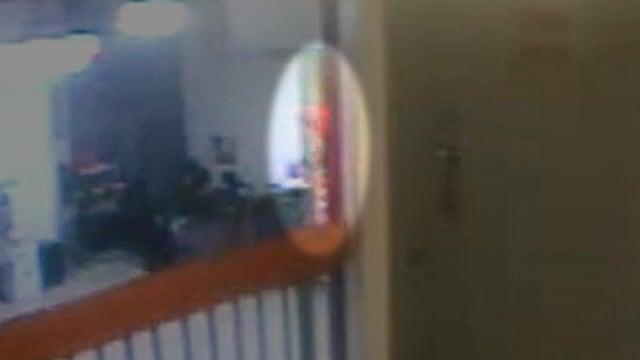
Newly released Department of Justice documents show that investigators reviewing surveillance footage from the night of Jeffrey Epstein's death observed an orange-colored shape moving up a staircase toward the isolated, locked tier where his cell was located at approximately 10:39 p.m. on Aug. 9, 2019.
That entry in an observation log of the video from the Metropolitan Correctional Center appears to suggest something previously unreported by authorities: "A flash of orange looks to be going up the L Tier stairs — could possibly be an inmate escorted up to that Tier."
It also appears, according to an FBI memorandum, that reviews by investigators led to disparate conclusions by the FBI and those examining the same video from the Department of Justice's Office of Inspector General.
The FBI log describes the fuzzy image as "possibly an inmate."
The inspector general logs it as an officer carrying orange "linen or bedding," noting it in their final report as "an unidentified [corrections officer]."
The final report by the Inspector General stated: "At approximately 10:39 p.m., an unidentified CO appeared to walk up the L Tier stairway, and then reappeared within view of the camera at 10:41 p.m."
Official reports state that Epstein died by suicide some time before 6:30 a.m., when his body was discovered by a corrections officer delivering his breakfast. No official time of death was ever determined. In recent months, there have been questions about the work of investigators probing the circumstances of his death.
In an in-depth analysis of surveillance video from the jail, CBS News previously reported on the figure on the stairs and consulted independent video analysts who said the movement was more consistent with an inmate — or someone wearing an orange prison uniform — than a corrections officer.
The new records raise more questions about activity near Epstein's tier late that evening. Official reviews of Epstein's death make no mention of the figure in orange, and later pronouncements from authorities including the attorney general at the time, Bill Barr, were that no one entered Epstein's housing tier the night of his death. Last summer in an interview on "Fox & Friends," then-deputy FBI director Dan Bongino said, "There's video clear as day, he's the only person in there and the only person coming out. You can see it."
Prison employees interviewed by CBS News said escorting an inmate at that hour would have been highly unusual. The identification of the individual could have been crucial to reconstructing the events, given that the sighting occurred within the estimated window of Epstein's possible time of death.
The staircase leading to his cell tier was captured by the only camera known to have been recording that night, positioned in a way that partially obscured the approach to Epstein's tier. Government investigators relied heavily on that footage in reconstructing the timeline of events. But because of the camera angle, it was not possible to rule out whether someone could have climbed the stairs and entered the tier without being clearly visible. CBS News' analysis of that video found additional contradictions between what the video showed and official statements.
Thousands of pages released last week as part of a broader Justice Department disclosure of Epstein-related files, totaling more than 3 million documents, provide additional detail about the hours between the evening of Aug. 9, when Epstein was last seen alive on camera, and the discovery of his body the following morning.
Records and interviews describe a largely quiet night inside the Special Housing Unit, or SHU, where Epstein was being held. Several inmates told investigators they were using drugs inside their cells, including marijuana and K2, a synthetic substance that multiple witnesses said was common on the tier.
Among those interviewed were the two corrections officers assigned to the unit that night, Tova Noel and Ghitto Bonhomme, a materials handler who had not previously been publicly identified. Documents show Bonhomme was interviewed twice in September 2019 in sessions conducted in lieu of a grand jury subpoena.
According to Noel's account, Bonhomme had been working multiple consecutive shifts and slept while on duty for a period between approximately 10 p.m. and midnight.
Investigators also questioned Noel about an unexplained change in the recorded number of inmates in the SHU, which appeared to drop from 73 to 72 sometime between 10 p.m. and 3 a.m. Noel said she was "probably" mistaken about the discrepancy and told investigators she had no memory of a count changing.
Neither officer was specifically asked about the orange-colored figure noted in the video observation log. Bonhomme told investigators he did not remember the period between 10 p.m. and midnight and said he had no recollection of anyone walking up the stairs toward
/ CBS News
Newly released Department of Justice documents show that investigators reviewing surveillance footage from the night of Jeffrey Epstein's death observed an orange-colored shape moving up a staircase toward the isolated, locked tier where his cell was located at approximately 10:39 p.m. on Aug. 9, 2019.
That entry in an observation log of the video from the Metropolitan Correctional Center appears to suggest something previously unreported by authorities: "A flash of orange looks to be going up the L Tier stairs — could possibly be an inmate escorted up to that Tier."
It also appears, according to an FBI memorandum, that reviews by investigators led to disparate conclusions by the FBI and those examining the same video from the Department of Justice's Office of Inspector General.
The FBI log describes the fuzzy image as "possibly an inmate."
The inspector general logs it as an officer carrying orange "linen or bedding," noting it in their final report as "an unidentified [corrections officer]."
The final report by the Inspector General stated: "At approximately 10:39 p.m., an unidentified CO appeared to walk up the L Tier stairway, and then reappeared within view of the camera at 10:41 p.m."
Official reports state that Epstein died by suicide some time before 6:30 a.m., when his body was discovered by a corrections officer delivering his breakfast. No official time of death was ever determined. In recent months, there have been questions about the work of investigators probing the circumstances of his death.
In an in-depth analysis of surveillance video from the jail, CBS News previously reported on the figure on the stairs and consulted independent video analysts who said the movement was more consistent with an inmate — or someone wearing an orange prison uniform — than a corrections officer.
The new records raise more questions about activity near Epstein's tier late that evening. Official reviews of Epstein's death make no mention of the figure in orange, and later pronouncements from authorities including the attorney general at the time, Bill Barr, were that no one entered Epstein's housing tier the night of his death. Last summer in an interview on "Fox & Friends," then-deputy FBI director Dan Bongino said, "There's video clear as day, he's the only person in there and the only person coming out. You can see it."
Prison employees interviewed by CBS News said escorting an inmate at that hour would have been highly unusual. The identification of the individual could have been crucial to reconstructing the events, given that the sighting occurred within the estimated window of Epstein's possible time of death.
The staircase leading to his cell tier was captured by the only camera known to have been recording that night, positioned in a way that partially obscured the approach to Epstein's tier. Government investigators relied heavily on that footage in reconstructing the timeline of events. But because of the camera angle, it was not possible to rule out whether someone could have climbed the stairs and entered the tier without being clearly visible. CBS News' analysis of that video found additional contradictions between what the video showed and official statements.
Thousands of pages released last week as part of a broader Justice Department disclosure of Epstein-related files, totaling more than 3 million documents, provide additional detail about the hours between the evening of Aug. 9, when Epstein was last seen alive on camera, and the discovery of his body the following morning.
Records and interviews describe a largely quiet night inside the Special Housing Unit, or SHU, where Epstein was being held. Several inmates told investigators they were using drugs inside their cells, including marijuana and K2, a synthetic substance that multiple witnesses said was common on the tier.
Among those interviewed were the two corrections officers assigned to the unit that night, Tova Noel and Ghitto Bonhomme, a materials handler who had not previously been publicly identified. Documents show Bonhomme was interviewed twice in September 2019 in sessions conducted in lieu of a grand jury subpoena.
According to Noel's account, Bonhomme had been working multiple consecutive shifts and slept while on duty for a period between approximately 10 p.m. and midnight.
Investigators also questioned Noel about an unexplained change in the recorded number of inmates in the SHU, which appeared to drop from 73 to 72 sometime between 10 p.m. and 3 a.m. Noel said she was "probably" mistaken about the discrepancy and told investigators she had no memory of a count changing.
Neither officer was specifically asked about the orange-colored figure noted in the video observation log. Bonhomme told investigators he did not remember the period between 10 p.m. and midnight and said he had no recollection of anyone walking up the stairs toward