Despite the ceasefire agreement which came into effect on 10 October 2025, Israeli forces continue to kill and injure Palestinians - including children - with drones, airstrikes and shootings.
An agreement does not undo the immense suffering experienced by so many. Two years of catastrophic violence have left deep scars. More than 70,000 people have lost their lives during this genocide, including 15 of our own MSF colleagues.
Families displaced from their homes on multiple occasions are now experiencing another devastation: returning to find nothing left, their homes and sometimes whole neighbourhoods razed to the ground. Explained - Why is MSF using the term genocide?
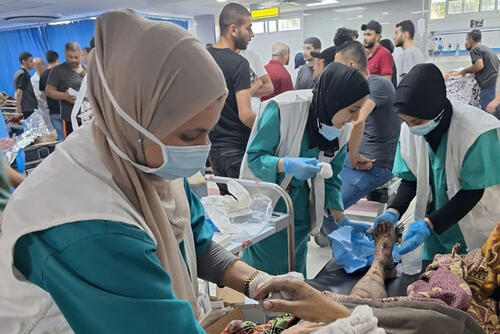
Right now, our teams in Gaza are treating patients injured or affected by the conflict. This is only possible because of donations from people like you.
Your donation will support our medical work in Gaza and in current conflicts in the Middle East, including the West Bank and Lebanon.
Please donate today to support our emergency teams.
Click here to learn more about how we spend your money
As of December 2025, over 70,000 people have been killed in Gaza, including 15 MSF staff.
Palestinians in Gaza are near fully reliant on aid for basic survival. Although commercial trucks are entering the Strip, the amount of goods allowed into the Strip by Israeli authorities is far from sufficient, is deliberately blocked, and continues to keep Palestinians lives hanging by a thread.
Our teams in Gaza have seen: the deliberate targeting of medics and hospitals; the use of starvation as a weapon of war with a blockade starving people of food, water, fuel and medical supplies; the militarisation of aid, and the massacre of starving people queuing for aid.
In short, we are witnessing a genocide. Through deliberate actions — including forced displacement, annexation, and mass killings — Israel is systematically destroying the conditions necessary for Palestinian life.
Much of Gaza’s civilian infrastructure has been intentionally destroyed. Hospitals have been completely overwhelmed and have faced running out of critical supplies. Some medical facilities have been hit by indiscriminate bombing while others have been under siege.
We have been witnessing a campaign of ethnic cleansing as the very fabric of society and Palestinian life is being wiped away in Gaza. This campaign not only displaces Palestinians on a massive scale but also seeks to deny them — and future generations — their right of safe return, effectively erasing entire communities from the map.
Israel is now taking steps to stop the work of MSF and other NGOs in Gaza and the West Bank, by threatening to withhold registration.
Here we address questions and allegations about MSF's work in Gaza
We currently have over 1,000 staff members in Gaza and over 170 in the West Bank.
The majority of our Gaza team are Palestinian and many have now lost homes or family members in the violence. Throughout the war, MSF staff have been working at hospitals and clinics, providing essential medical aid that includes:
• Surgical care• Wound and burn care• Maternity care• Physiotherapy • Mental health support• Vaccinations• Outpatient consultations
Hospitals and clinics that we currently support or have previously supported include:
• Southern Gaza: Nasser Hospital plus the Al-Mawasi, Khan Younis and Al-Attar healthcare centres and the Al-Quarara clinic(Previously European Gaza Hospital, Rafah Indonesian Field Hospital, Al-Emirati Maternity Hospital and Martyrs and Beni Suhaila clinics)• Middle Area: Al-Aqsa Hospital and two field hospitals, plus the Al-Martyrs and Al-Hekker healthcare centres• Northern Gaza: MSF Gaza City clinic (Previously Al-Shifa Hospital and Al-Awda Hospital)
MSF teams have been working in Palestine since 1989, providing trauma care, mental health services and running a specialist reconstructive surgery project.
Border restrictions and the limited options for crossing into Gaza have made our supply operations extremely difficult. Israeli authorities imposed a full siege—the longest since the beginning of the war—blocking all aid and depriving Palestinians of essential services and the basic necessities of life, including access to water.
Despite the supposed lifting of the siege on 18 May, only tiny amounts of humanitarian aid have been allowed in. No fuel has entered and food distribution, either through the US-Israeli scheme or people waiting for the tiny number of humanitarian trucks allowed in are leading to deadly massacres.
In the first year since 7 October 2023, MSF delivered 636 tons of logistics and medical equipment (around 130 trucks). This included medicines, wound dressings, surgical kits, generators and two field hospitals.
MSF’s activities in the West Bank have been affected by the escalation of violence and movement restrictions that have
An agreement does not undo the immense suffering experienced by so many. Two years of catastrophic violence have left deep scars. More than 70,000 people have lost their lives during this genocide, including 15 of our own MSF colleagues.
Families displaced from their homes on multiple occasions are now experiencing another devastation: returning to find nothing left, their homes and sometimes whole neighbourhoods razed to the ground. Explained - Why is MSF using the term genocide?
Right now, our teams in Gaza are treating patients injured or affected by the conflict. This is only possible because of donations from people like you.
Your donation will support our medical work in Gaza and in current conflicts in the Middle East, including the West Bank and Lebanon.
Please donate today to support our emergency teams.
Click here to learn more about how we spend your money
As of December 2025, over 70,000 people have been killed in Gaza, including 15 MSF staff.
Palestinians in Gaza are near fully reliant on aid for basic survival. Although commercial trucks are entering the Strip, the amount of goods allowed into the Strip by Israeli authorities is far from sufficient, is deliberately blocked, and continues to keep Palestinians lives hanging by a thread.
Our teams in Gaza have seen: the deliberate targeting of medics and hospitals; the use of starvation as a weapon of war with a blockade starving people of food, water, fuel and medical supplies; the militarisation of aid, and the massacre of starving people queuing for aid.
In short, we are witnessing a genocide. Through deliberate actions — including forced displacement, annexation, and mass killings — Israel is systematically destroying the conditions necessary for Palestinian life.
Much of Gaza’s civilian infrastructure has been intentionally destroyed. Hospitals have been completely overwhelmed and have faced running out of critical supplies. Some medical facilities have been hit by indiscriminate bombing while others have been under siege.
We have been witnessing a campaign of ethnic cleansing as the very fabric of society and Palestinian life is being wiped away in Gaza. This campaign not only displaces Palestinians on a massive scale but also seeks to deny them — and future generations — their right of safe return, effectively erasing entire communities from the map.
Israel is now taking steps to stop the work of MSF and other NGOs in Gaza and the West Bank, by threatening to withhold registration.
Here we address questions and allegations about MSF's work in Gaza
We currently have over 1,000 staff members in Gaza and over 170 in the West Bank.
The majority of our Gaza team are Palestinian and many have now lost homes or family members in the violence. Throughout the war, MSF staff have been working at hospitals and clinics, providing essential medical aid that includes:
• Surgical care• Wound and burn care• Maternity care• Physiotherapy • Mental health support• Vaccinations• Outpatient consultations
Hospitals and clinics that we currently support or have previously supported include:
• Southern Gaza: Nasser Hospital plus the Al-Mawasi, Khan Younis and Al-Attar healthcare centres and the Al-Quarara clinic(Previously European Gaza Hospital, Rafah Indonesian Field Hospital, Al-Emirati Maternity Hospital and Martyrs and Beni Suhaila clinics)• Middle Area: Al-Aqsa Hospital and two field hospitals, plus the Al-Martyrs and Al-Hekker healthcare centres• Northern Gaza: MSF Gaza City clinic (Previously Al-Shifa Hospital and Al-Awda Hospital)
MSF teams have been working in Palestine since 1989, providing trauma care, mental health services and running a specialist reconstructive surgery project.
Border restrictions and the limited options for crossing into Gaza have made our supply operations extremely difficult. Israeli authorities imposed a full siege—the longest since the beginning of the war—blocking all aid and depriving Palestinians of essential services and the basic necessities of life, including access to water.
Despite the supposed lifting of the siege on 18 May, only tiny amounts of humanitarian aid have been allowed in. No fuel has entered and food distribution, either through the US-Israeli scheme or people waiting for the tiny number of humanitarian trucks allowed in are leading to deadly massacres.
In the first year since 7 October 2023, MSF delivered 636 tons of logistics and medical equipment (around 130 trucks). This included medicines, wound dressings, surgical kits, generators and two field hospitals.
MSF’s activities in the West Bank have been affected by the escalation of violence and movement restrictions that have