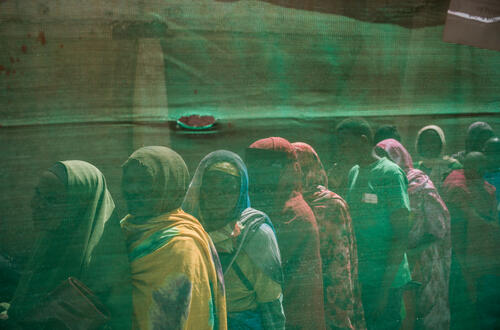
Underreported and even ignored, Sudan is facing a monumental humanitarian crisis.
A brutal civil war has forced more than 11 million people to flee their homes. Men, women and children are suffering massacres and violent injuries. And, according to the World Food Programme, over 25 million are now facing acute hunger.
Right now, this is the largest displacement crisis on the planet. One of the worst seen in decades.
Sudan rarely makes the headlines. Even aid agencies are barely responding.
For over a year, Médecins Sans Frontières / Doctors Without Borders (MSF) has been raising the alarm on this overlooked emergency while our teams work to treat people caught in the middle of it. In some places, we are the only ones there.
Sudan is a vast and diverse country. It is home to over 48 million people speaking more than 115 languages and dialects in an area equal to France, Germany, Italy and Spain combined.
On Saturday 15 April 2023, the people of Sudan woke up to a civil war.
Intense gunfights, shelling and airstrikes had erupted around the capital Khartoum and would soon spread to other cities, especially in the western region known as Darfur.
This conflict didn’t come from nowhere. A military coup in 2021 led to an uneasy political and economic situation. Tensions grew between the Sudanese Armed Forces (SAF) and the paramilitary Rapid Support Forces (RSF) – a group that had previously operated on behalf of the government.
Since those first days, new regional militias have entered the conflict on both sides, with civilians frequently being targeted in acts of extreme violence, often because of their ethnicity.
Hospitals and healthcare staff have been routinely attacked in Sudan.
MSF alone has recorded at least 60 incidents of violence against our people, our vehicles and our buildings. The MSF-supported Al Nao Hospital has been shelled on three separate occasions, while an airstrike near the Babiker Nahar Paediatric Hospital killed two children in the intensive care unit after the roof collapsed.
In June 2024, the World Health Organization estimated that, at best, only 30 percent of healthcare facilities are still functioning in Sudan.
A staggering 25 million people are estimated to need humanitarian assistance in Sudan.
And, from the start of the war, MSF has been working with the Ministry of Health to treat some of this vast number of people who require urgent medical care.
However, this hasn’t stopped the Government of Sudan from repeatedly and deliberately obstructing humanitarian aid, especially to areas outside of SAF control. This is the weaponisation of aid, and it is costing lives.
From blockades that prevent emergency supplies crossing frontlines to the denial of travel permits for humanitarian workers, the consequences are clear and dangerous.
The obstruction of humanitarian aid means medical supplies are critically low. At times, this had made some life-saving care almost impossible.
In just one example, the MSF surgical team at Bashair Teaching Hospital in Khartoum had carried out almost 3,000 procedures – including war surgeries and emergency caesarean sections – when they were forced to suspend operations for more than three months as a military blockade exhausted their supplies.
Elsewhere, in RSF-controlled areas where different militias operate, healthcare facilities and warehouses have been regularly looted, leaving medical teams without essential medicines and equipment.
Help us care for people caught in the world's worst healthcare crises.
The conflict has disrupted food supply across Sudan and people have been cut off from their jobs, meaning millions now face a new crisis: hunger.
At Zamzam – a vast camp in North Darfur where over 300,000 people are sheltering – our teams have witnessed the severe impact of this food insecurity.
In March and April, MSF found that almost a third of children here were suffering from malnutrition, as well as a third of pregnant and breastfeeding women. For both groups, this is double the ‘threshold’ rate considered an emergency. In response, we established a field hospital to provide urgent care.
However, we now fear the situation has deteriorated even further since a surge in heavy fighting began in May, around the nearby city of El Fasher.
Streams of people have fled towards the camp and it’s not known how many have arrived. Access to food has become even more challenging and MSF staff themselves have been displaced.
All of this makes it extremely difficult to get an accurate picture of what is unfolding inside Zamzam. However, it is likely to be alarming.
The crisis is not confined to Sudan. Millions of people have made the desperate decision to seek safety in neighbouring countries and become refugees.
In West Darfur, extreme violence in the city of El Geneina has driven an exodus of people over the nearby border with Chad where hundreds of thousands are now living in makeshift camps.
In response, MSF
A brutal civil war has forced more than 11 million people to flee their homes. Men, women and children are suffering massacres and violent injuries. And, according to the World Food Programme, over 25 million are now facing acute hunger.
Right now, this is the largest displacement crisis on the planet. One of the worst seen in decades.
Sudan rarely makes the headlines. Even aid agencies are barely responding.
For over a year, Médecins Sans Frontières / Doctors Without Borders (MSF) has been raising the alarm on this overlooked emergency while our teams work to treat people caught in the middle of it. In some places, we are the only ones there.
Sudan is a vast and diverse country. It is home to over 48 million people speaking more than 115 languages and dialects in an area equal to France, Germany, Italy and Spain combined.
On Saturday 15 April 2023, the people of Sudan woke up to a civil war.
Intense gunfights, shelling and airstrikes had erupted around the capital Khartoum and would soon spread to other cities, especially in the western region known as Darfur.
This conflict didn’t come from nowhere. A military coup in 2021 led to an uneasy political and economic situation. Tensions grew between the Sudanese Armed Forces (SAF) and the paramilitary Rapid Support Forces (RSF) – a group that had previously operated on behalf of the government.
Since those first days, new regional militias have entered the conflict on both sides, with civilians frequently being targeted in acts of extreme violence, often because of their ethnicity.
Hospitals and healthcare staff have been routinely attacked in Sudan.
MSF alone has recorded at least 60 incidents of violence against our people, our vehicles and our buildings. The MSF-supported Al Nao Hospital has been shelled on three separate occasions, while an airstrike near the Babiker Nahar Paediatric Hospital killed two children in the intensive care unit after the roof collapsed.
In June 2024, the World Health Organization estimated that, at best, only 30 percent of healthcare facilities are still functioning in Sudan.
A staggering 25 million people are estimated to need humanitarian assistance in Sudan.
And, from the start of the war, MSF has been working with the Ministry of Health to treat some of this vast number of people who require urgent medical care.
However, this hasn’t stopped the Government of Sudan from repeatedly and deliberately obstructing humanitarian aid, especially to areas outside of SAF control. This is the weaponisation of aid, and it is costing lives.
From blockades that prevent emergency supplies crossing frontlines to the denial of travel permits for humanitarian workers, the consequences are clear and dangerous.
The obstruction of humanitarian aid means medical supplies are critically low. At times, this had made some life-saving care almost impossible.
In just one example, the MSF surgical team at Bashair Teaching Hospital in Khartoum had carried out almost 3,000 procedures – including war surgeries and emergency caesarean sections – when they were forced to suspend operations for more than three months as a military blockade exhausted their supplies.
Elsewhere, in RSF-controlled areas where different militias operate, healthcare facilities and warehouses have been regularly looted, leaving medical teams without essential medicines and equipment.
Help us care for people caught in the world's worst healthcare crises.
The conflict has disrupted food supply across Sudan and people have been cut off from their jobs, meaning millions now face a new crisis: hunger.
At Zamzam – a vast camp in North Darfur where over 300,000 people are sheltering – our teams have witnessed the severe impact of this food insecurity.
In March and April, MSF found that almost a third of children here were suffering from malnutrition, as well as a third of pregnant and breastfeeding women. For both groups, this is double the ‘threshold’ rate considered an emergency. In response, we established a field hospital to provide urgent care.
However, we now fear the situation has deteriorated even further since a surge in heavy fighting began in May, around the nearby city of El Fasher.
Streams of people have fled towards the camp and it’s not known how many have arrived. Access to food has become even more challenging and MSF staff themselves have been displaced.
All of this makes it extremely difficult to get an accurate picture of what is unfolding inside Zamzam. However, it is likely to be alarming.
The crisis is not confined to Sudan. Millions of people have made the desperate decision to seek safety in neighbouring countries and become refugees.
In West Darfur, extreme violence in the city of El Geneina has driven an exodus of people over the nearby border with Chad where hundreds of thousands are now living in makeshift camps.
In response, MSF