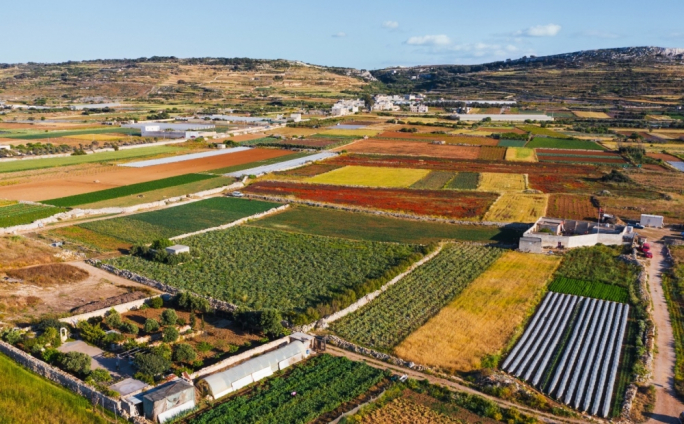
Eurostat data shows Malta has the EU’s highest arable land prices, a trend farmers say is being driven increasingly by recreational and non-productive uses rather than agriculture • Legislation has however, ensured rural leases in Malta are lowest in EU
Malta has once again topped the European Union in arable land prices, with average costs far above those in any other member state, according to Eurostat.
But farmers say this reflects intense recreational and non-productive demand, not just agricultural value.
The latest data collated by Eurostat, the EU statistical agency, shows that the average price of one hectare of arable land in Malta in 2024 reached €201,263, more than 13 times the EU average of €15,224.
Across the bloc, land prices vary widely. The Netherlands and Portugal follow Malta in cost, with average prices of around €96,608 and €76,556 per hectare respectively, while eastern European countries such as Latvia (€4,825), Lithuania (€5,590) and Slovakia (€5,823) sit at the lowest end of the spectrum.
For ordinary Maltese farmers, however, official averages may only tell part of the story. Malcolm Borg, head of the farmers’ association Għaqda Bdiewa Attivi, argues that the true market price of agricultural land is significantly higher than Eurostat’s figures suggest—in some cases four times the published average.
Borg points out that apart from the limited supply of land—Malta is the EU’s smallest and most densely populated country—prices are also driven up by the high demand for land for recreational and other non-productive uses such as informal leisure spaces and the parking of trailers. These factors, he argues, are driving prices up beyond what many farmers can realistically afford.
The phenomenon of having land zoned for farming being purchased for non-agricultural purposes has been cited in various reports as a key driver of Malta’s elevated land values.
In 2022 the Planning Authority’s annual report explicitly noted that the parcelling of agricultural land for recreational purposes is increasing pressure on land outside the development zone (ODZ). It observed a noticeable increase in rural land being subdivided and bought for non-agricultural use, a trend that has implications for how the market function and how planning decisions are assessed. The PA’s 2024 annual report had also remarked that “the trends of applications in rural areas for formalisation of recreational uses post‑COVID has continued throughout the past year” and that applications for subdividing land and for uses like stables remained markedly high.
This issue even led the government to introduce new regulations requiring arable land to be ploughed at least once a year, in an effort to preserve the agricultural potential even if it is being used for purposes other than farming.
Għaqda Bdiewa Attivi had reacted positively to the land protection reforms, viewing them as a necessary step to curb recreational and non‑productive use.
Across the EU, the trend of rising land values is not confined to Malta alone. Eurostat’s data shows that arable land prices across the bloc rose by 6.1% in 2024 compared with the previous year, reflecting broader pressures on land markets.
Yet, where Malta stands apart is in the degree of this pressure. Unlike countries with abundant rural land and predominantly agricultural markets, Malta’s scarcity of available farmland and intense competition from non-farm buyers compounds the challenge of accessing land for genuine food production.
For farmers, this has real consequences. High acquisition costs—exacerbated by recreational and speculative demand—make it harder for new entrants and established producers alike to expand operations or even maintain existing holdings. This scenario risks undermining the sustainability of the agricultural sector. In countries with cheaper land, agriculture remains a more viable business proposition.
But while the price of arable land in Malta is the highest across the EU, the average rental prices of arable land are the lowest. Malta’s arable land rents average at around €92 per hectare—well below the EU average of €295.
Borg explains that this is largely because rents are regulated by legislation, specifically the Valuation of Agricultural Land Regulations (SL 199.2/2023). These rules establish a standardised methodology for valuing agricultural land for lease purposes, which the Rural Leases Control Board uses to set fair rental rates.
The new law came in the wake of a landmark decision by Judge Lawrence Mintoff on a rural lease case involving a small agricultural plot in Qrendi. In that case, a landowner sought to repossess land from long‑standing tenant farmers, but the court rejected the claim and upheld the agricultural lease, reinforcing the legal protection given to farmers under Malta’s rural lease laws. The judgment stressed that the law was intended to protect agricultura
Malta has once again topped the European Union in arable land prices, with average costs far above those in any other member state, according to Eurostat.
But farmers say this reflects intense recreational and non-productive demand, not just agricultural value.
The latest data collated by Eurostat, the EU statistical agency, shows that the average price of one hectare of arable land in Malta in 2024 reached €201,263, more than 13 times the EU average of €15,224.
Across the bloc, land prices vary widely. The Netherlands and Portugal follow Malta in cost, with average prices of around €96,608 and €76,556 per hectare respectively, while eastern European countries such as Latvia (€4,825), Lithuania (€5,590) and Slovakia (€5,823) sit at the lowest end of the spectrum.
For ordinary Maltese farmers, however, official averages may only tell part of the story. Malcolm Borg, head of the farmers’ association Għaqda Bdiewa Attivi, argues that the true market price of agricultural land is significantly higher than Eurostat’s figures suggest—in some cases four times the published average.
Borg points out that apart from the limited supply of land—Malta is the EU’s smallest and most densely populated country—prices are also driven up by the high demand for land for recreational and other non-productive uses such as informal leisure spaces and the parking of trailers. These factors, he argues, are driving prices up beyond what many farmers can realistically afford.
The phenomenon of having land zoned for farming being purchased for non-agricultural purposes has been cited in various reports as a key driver of Malta’s elevated land values.
In 2022 the Planning Authority’s annual report explicitly noted that the parcelling of agricultural land for recreational purposes is increasing pressure on land outside the development zone (ODZ). It observed a noticeable increase in rural land being subdivided and bought for non-agricultural use, a trend that has implications for how the market function and how planning decisions are assessed. The PA’s 2024 annual report had also remarked that “the trends of applications in rural areas for formalisation of recreational uses post‑COVID has continued throughout the past year” and that applications for subdividing land and for uses like stables remained markedly high.
This issue even led the government to introduce new regulations requiring arable land to be ploughed at least once a year, in an effort to preserve the agricultural potential even if it is being used for purposes other than farming.
Għaqda Bdiewa Attivi had reacted positively to the land protection reforms, viewing them as a necessary step to curb recreational and non‑productive use.
Across the EU, the trend of rising land values is not confined to Malta alone. Eurostat’s data shows that arable land prices across the bloc rose by 6.1% in 2024 compared with the previous year, reflecting broader pressures on land markets.
Yet, where Malta stands apart is in the degree of this pressure. Unlike countries with abundant rural land and predominantly agricultural markets, Malta’s scarcity of available farmland and intense competition from non-farm buyers compounds the challenge of accessing land for genuine food production.
For farmers, this has real consequences. High acquisition costs—exacerbated by recreational and speculative demand—make it harder for new entrants and established producers alike to expand operations or even maintain existing holdings. This scenario risks undermining the sustainability of the agricultural sector. In countries with cheaper land, agriculture remains a more viable business proposition.
But while the price of arable land in Malta is the highest across the EU, the average rental prices of arable land are the lowest. Malta’s arable land rents average at around €92 per hectare—well below the EU average of €295.
Borg explains that this is largely because rents are regulated by legislation, specifically the Valuation of Agricultural Land Regulations (SL 199.2/2023). These rules establish a standardised methodology for valuing agricultural land for lease purposes, which the Rural Leases Control Board uses to set fair rental rates.
The new law came in the wake of a landmark decision by Judge Lawrence Mintoff on a rural lease case involving a small agricultural plot in Qrendi. In that case, a landowner sought to repossess land from long‑standing tenant farmers, but the court rejected the claim and upheld the agricultural lease, reinforcing the legal protection given to farmers under Malta’s rural lease laws. The judgment stressed that the law was intended to protect agricultura