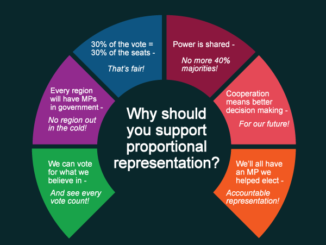
The debate over proportional representation (PR) has resurfaced with vigour in Sierra Leone, stirred by comments from the Executive branch and framed by Andrew Keili’s “Ponder My Thoughts.” It is not a new conversation. As a member of the Edmund Cowan–led 2013 Constitutional Review Committee, I recall that the same question arose then — whether PR, which works for legislative inclusivity, should also extend to the Executive. We resisted that temptation then, and for good reason.
Today, the argument returns dressed in reformist robes, claiming that the Presidency has become too powerful, and that proportionality would bring fairness and inclusion. But this prescription risks replacing one ailment with a far worse disease. The problem with our democracy is not that the Executive is strong; it is that our institutions of oversight are weak. Diluting authority will not cure weakness; it will institutionalise paralysis. What Sierra Leone needs is not fragmentation, but fidelity — an Executive answerable to law, not beholden to arithmetic.
Governance is not a factory floor, and the Presidency cannot be a conveyor belt producing new heads of government whenever coalitions crack. Stability, coherence, and decisiveness are the lifeblood of executive authority. As Le Châtelier’s principle reminds us in Chemistry, when a stable system is disturbed, it reacts unpredictably to restore equilibrium. To force proportionality upon the Executive would be to impose instability by design — a structure meant for unity compelled to serve competing masters. The outcome would not be inclusion but confusion.
Every mature democracy is built on balance, not dispersion. Locke and Rousseau, whose writings nourished the democratic imagination, both recognised that popular sovereignty requires coherent authority. Locke argued that “the majority having once consented, the act of the community is binding on all.” Rousseau warned that freedom survives only where the General Will is unified, not splintered into factions. A President, therefore, must embody the single, indivisible consent of the people — not a collage of competing party bargains. Once the people confer executive power, that mandate must endure until lawfully renewed, not continually renegotiated through coalition deals.
As Lord Denning famously said, “You cannot put something on nothing and expect it to stay there.” Lord Bingham, in The Rule of Law, added that the strength of any democracy lies in clarity, certainty, and accountability. A proportional Executive would obscure who governs, who decides, and who answers when things go wrong. It would blur responsibility, replacing answerability with excuses. When accountability is everyone’s duty, it becomes no one’s burden.
The 2013 Constitutional Review Committee confronted this exact danger. Some minor parties, understandably frustrated by exclusion, proposed that PR be extended to the Presidency and Cabinet. After weeks of spirited deliberation, the committee overwhelmingly rejected the idea. We concluded that while PR may enrich the legislature, the Executive must remain the nation’s stabilising centre. As we recorded in our minutes, inviting opposition parties into government would be like “boiling the baby in its mother’s milk” — allowing those rejected at the ballot box to steer the ship of state. To dilute the Executive in this way would undermine the very logic of electoral choice.
James Madison and Alexander Hamilton reached the same conclusion more than two centuries ago. In The Federalist Papers, Madison warned that “the causes of faction cannot be removed, but their effects must be controlled.” Hamilton declared that “energy in the Executive is a leading character in the definition of good government.” Unity ensures responsibility; division ensures paralysis. A proportional Executive would produce a government of negotiators rather than leaders — a machinery of motion without direction, a journey with no arrival, driven by bargaining rather than conviction.
To accept opposition parties into the Executive under a proportional formula would also reduce governance to political picketing — a spectacle where party leaders act less like statesmen and more like trade-union executives clamouring for ministerial seats. Instead of offering principled opposition, they would become perpetual negotiators for positions. Government would descend from accountability to entitlement, from conviction to convenience — a bargaining forum for spoils, not a centre of national decision-making.
The Presidency is not a marketplace for power-sharing; it is a constitutional trust founded on a singular national mandate. Peter Tucker’s Review Commission reaffirmed this truth: while PR may “broaden voices in the legislature,” it must never “dilute the singular mandate of the Executive.” The President derives legitimacy directly from the people’s consent, not from post-elec
Today, the argument returns dressed in reformist robes, claiming that the Presidency has become too powerful, and that proportionality would bring fairness and inclusion. But this prescription risks replacing one ailment with a far worse disease. The problem with our democracy is not that the Executive is strong; it is that our institutions of oversight are weak. Diluting authority will not cure weakness; it will institutionalise paralysis. What Sierra Leone needs is not fragmentation, but fidelity — an Executive answerable to law, not beholden to arithmetic.
Governance is not a factory floor, and the Presidency cannot be a conveyor belt producing new heads of government whenever coalitions crack. Stability, coherence, and decisiveness are the lifeblood of executive authority. As Le Châtelier’s principle reminds us in Chemistry, when a stable system is disturbed, it reacts unpredictably to restore equilibrium. To force proportionality upon the Executive would be to impose instability by design — a structure meant for unity compelled to serve competing masters. The outcome would not be inclusion but confusion.
Every mature democracy is built on balance, not dispersion. Locke and Rousseau, whose writings nourished the democratic imagination, both recognised that popular sovereignty requires coherent authority. Locke argued that “the majority having once consented, the act of the community is binding on all.” Rousseau warned that freedom survives only where the General Will is unified, not splintered into factions. A President, therefore, must embody the single, indivisible consent of the people — not a collage of competing party bargains. Once the people confer executive power, that mandate must endure until lawfully renewed, not continually renegotiated through coalition deals.
As Lord Denning famously said, “You cannot put something on nothing and expect it to stay there.” Lord Bingham, in The Rule of Law, added that the strength of any democracy lies in clarity, certainty, and accountability. A proportional Executive would obscure who governs, who decides, and who answers when things go wrong. It would blur responsibility, replacing answerability with excuses. When accountability is everyone’s duty, it becomes no one’s burden.
The 2013 Constitutional Review Committee confronted this exact danger. Some minor parties, understandably frustrated by exclusion, proposed that PR be extended to the Presidency and Cabinet. After weeks of spirited deliberation, the committee overwhelmingly rejected the idea. We concluded that while PR may enrich the legislature, the Executive must remain the nation’s stabilising centre. As we recorded in our minutes, inviting opposition parties into government would be like “boiling the baby in its mother’s milk” — allowing those rejected at the ballot box to steer the ship of state. To dilute the Executive in this way would undermine the very logic of electoral choice.
James Madison and Alexander Hamilton reached the same conclusion more than two centuries ago. In The Federalist Papers, Madison warned that “the causes of faction cannot be removed, but their effects must be controlled.” Hamilton declared that “energy in the Executive is a leading character in the definition of good government.” Unity ensures responsibility; division ensures paralysis. A proportional Executive would produce a government of negotiators rather than leaders — a machinery of motion without direction, a journey with no arrival, driven by bargaining rather than conviction.
To accept opposition parties into the Executive under a proportional formula would also reduce governance to political picketing — a spectacle where party leaders act less like statesmen and more like trade-union executives clamouring for ministerial seats. Instead of offering principled opposition, they would become perpetual negotiators for positions. Government would descend from accountability to entitlement, from conviction to convenience — a bargaining forum for spoils, not a centre of national decision-making.
The Presidency is not a marketplace for power-sharing; it is a constitutional trust founded on a singular national mandate. Peter Tucker’s Review Commission reaffirmed this truth: while PR may “broaden voices in the legislature,” it must never “dilute the singular mandate of the Executive.” The President derives legitimacy directly from the people’s consent, not from post-elec